How to Start a Legitimate Newborn Photography Business: The Less Glamorous Essentials Most Photographers Overlook
Everyone wants to talk about the fun stuff when it comes to newborn photography. The outfits. The tiny props. The little hats and bonnets. The dreamy poses. And don't get me wrong, we'll get to all of that. In fact, my next blog post, Essential Props for Beginning Posed Newborn Photographers, will be launching soon. You'll definitely want to check it out.
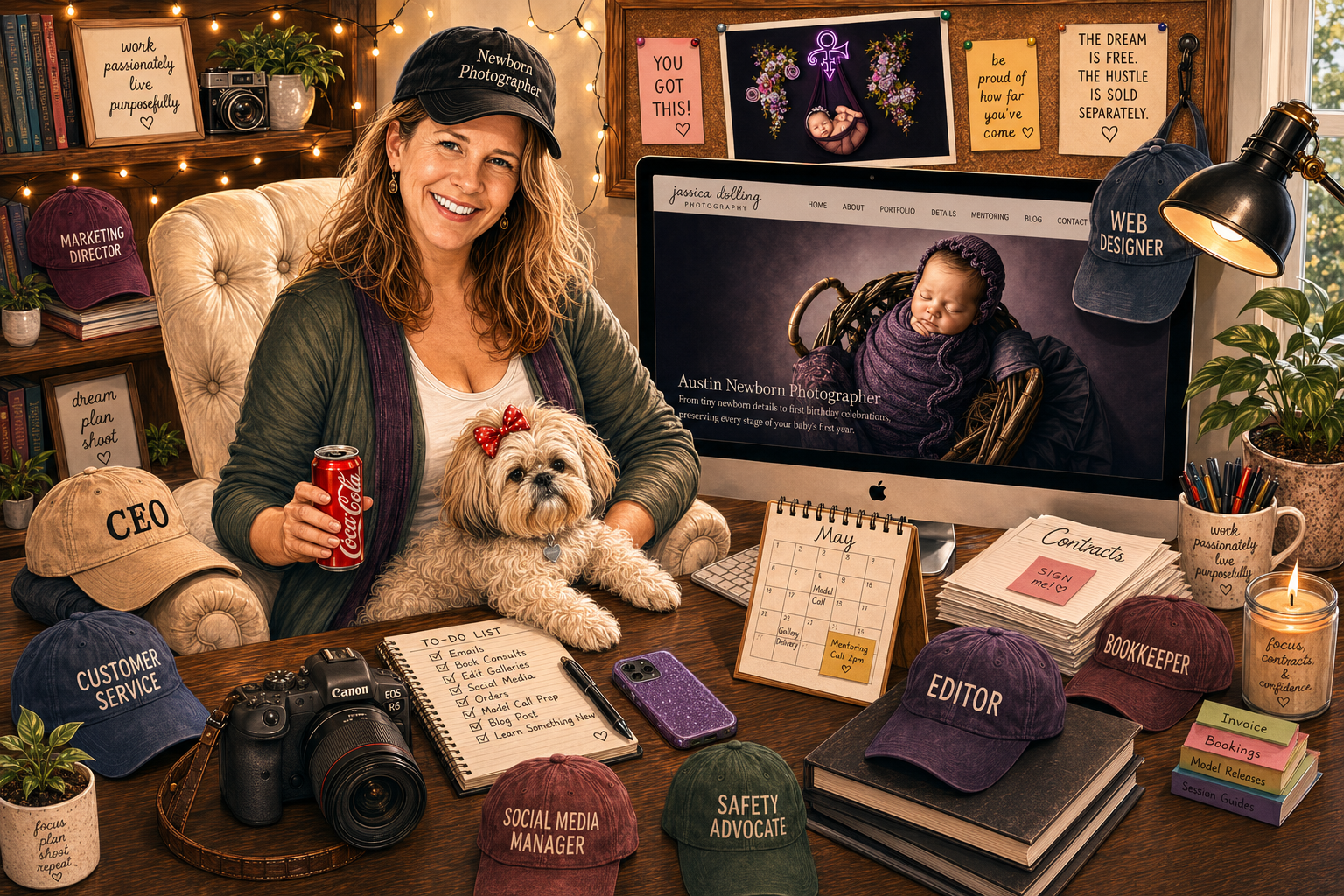
But if you're serious about turning your hobby into a legitimate business, there are some less glamorous pieces you simply can't afford to skip. When you start a newborn photography business, you quickly realize you'll be wearing a lot of hats. Photographer. Editor. Marketer. Bookkeeper. Customer service representative. Website designer. Social media manager. The list goes on.
This isn't legal or financial advice, and requirements vary depending on where you live. Think of this as a guide based on my own experience building a newborn photography business over the past decade. Use it as a starting point, do your own research, and consult professionals when needed. And if you'd like someone to walk alongside you through the process, I offer newborn photography mentoring designed to help photographers build safe, sustainable businesses they truly love.
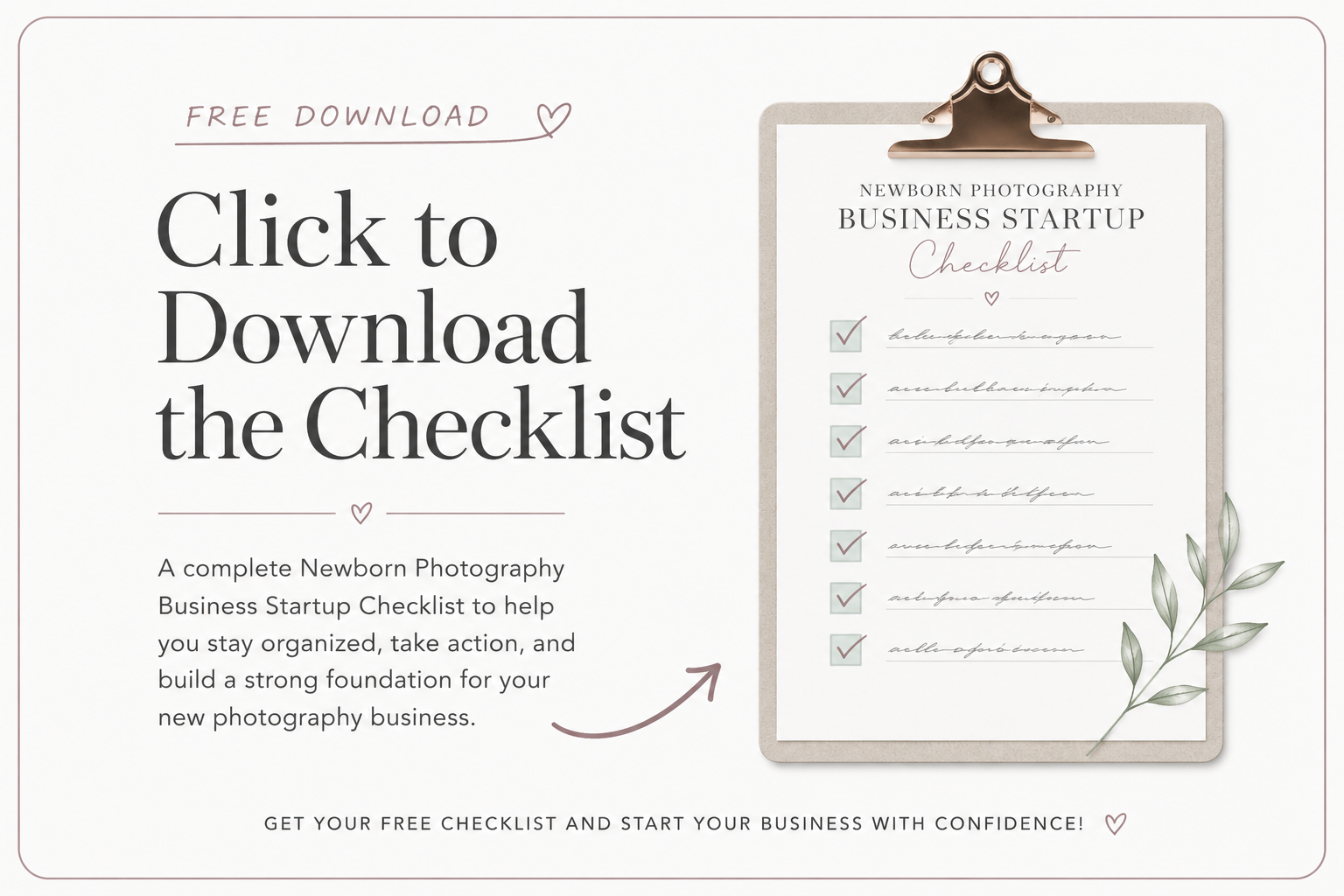
Feeling overwhelmed already? Download my free Newborn Photography Business Startup Checklist and tackle one step at a time.
Before You Buy Another Prop...
Before you invest thousands of dollars into props, outfits, and backdrops, I want you to pause for just a minute. The things in this article won't give you beautiful Instagram photos. They won't make your Pinterest boards prettier. But they will help protect your family, your clients, your finances, and the business you're working so hard to build. Let's start with the truly non-negotiable pieces.
1. Make It Official: Business Licenses and Legal Structure
One of the first decisions you'll need to make is how you'll legally structure your business. Could you technically photograph newborns without doing this? Sure. Should you? I would NOT recommend it. Depending on where you live, you may need a business license, a DBA ("doing business as"), or another type of registration. Requirements vary significantly from state to state, county to county, and country to country, so be sure to research your local requirements. Personally, I am a huge advocate for establishing an LLC (Limited Liability Company). One of the biggest reasons is that an LLC helps create a legal separation between you and your business. Without that separation, your personal assets such as your family's savings, your home, or other personal property, could potentially be at greater risk if your business were ever sued.
Now, an LLC isn't a magical shield that makes you lawsuit-proof, and it's important to consult with an attorney or accountant about your specific situation. But for many small business owners, it can provide an important layer of protection that a sole proprietorship or DBA simply doesn't offer. Many photographers start with a DBA because it's often simpler and less expensive upfront. However, a DBA generally does not provide the same liability protection as an LLC. When I established my business, I used LegalZoom and had a great experience. While it's certainly not the only option available, it made the process feel much less intimidating.
2. Apply for an EIN (Tax ID Number)
Once your business is established, you'll want to obtain an Employer Identification Number (EIN) from the IRS. Even if you don't plan to hire employees, having an EIN can be beneficial because it allows you to use a business tax identification number instead of your Social Security number on certain documents. It's one of those small tasks that makes your business feel much more legitimate.
3. Don't Forget About Sales Tax
This is one of those things that surprises a lot of new photographers. Depending on where you live, you may be required to collect and remit sales tax. For example, here in Texas, we currently collect 8.5% sales tax on qualifying transactions. The rules surrounding digital products, prints, and photography services can vary widely, so please check with your local taxing authority or accountant to determine what applies to your business. It's much easier to set this up correctly from the beginning than to discover later that you've accidentally skipped something important. And if sales tax applies where you live, be sure to factor it into your Cost of Doing Business (CODB) calculations and pricing structure. The last thing you want is to realize you're paying sales tax out of your own pocket because you didn't account for it when setting your prices.
4. Get Liability Insurance
If I could only convince new photographers to do one thing from this list, this would be near the top. Get insured. You're working with newborns. You're inviting clients into your studio or entering their homes. Accidents happen, even when you're incredibly careful. Start by calling your current insurance provider. You might be surprised to learn that they offer small business policies. If they don't, there are plenty of companies that specialize in photography insurance. Think of insurance as something that protects the business you're working so hard to build. Because it does.
5. Create a Business Plan (Even a Simple One)
No, this doesn't have to be a 40-page document. But you do need a plan. Ask yourself:
What types of sessions will I offer?
Will I specialize exclusively in newborns?
Will I offer milestones or cake smashes?
Will I operate using an all-inclusive model?
Will I use IPS (In-Person Sales)?
Will I choose a hybrid approach?
What experience do I want clients to have?
There isn't a universally "right" answer. The right answer is the one that aligns with your values, personality, financial goals, and lifestyle. Having clarity here will make almost every future business decision easier.
Need help sorting through all of these decisions? I offer virtual mentoring calls where we can talk through your business plan, pricing structure, service offerings, and long-term goals. Just click the link and scroll down to ‘One-on-One Virtual Mentoring’ to schedule a call and I can help you make your business plan hat fit you prefectly!
6. Set Up a Business Email and Phone Number
Please don't run your entire business through your personal email address. Create a professional business email address tied to your domain. Something as simple as hello@yourbusiness.com instantly elevates your professionalism. The same applies to a business phone number. You don't necessarily need a second phone. Many photographers use Google Voice to create a separate business line while keeping their personal number private. Boundaries matter.
7. Know Your CODB (Cost of Doing Business)
This is the section everyone wants to skip. Don't. You need to understand what it actually costs to operate your business. One of the biggest mindset shifts I had was realizing that pricing shouldn't be based solely on what other photographers in your area are charging. Instead, work backwards: determine the salary you'd like to earn, estimate how many sessions you'd realistically like to photograph each month, factor in your business expenses and taxes, and use those numbers to help build a pricing structure that supports the life you're trying to create.
Consider expenses such as:
Insurance
Website fees
CRM subscriptions
Editing software
Education
Equipment maintenance
Taxes
Prop purchases
Marketing expenses
Gallery delivery systems
Accounting fees
Office supplies
Studio rent (if applicable)
Once you know what it costs to run your business, you can begin building a pricing structure that actually supports your goals. Because charging "whatever everyone else charges" is not a business strategy. I’d be happy to coach you in how to do this. Sign up for a virtual mentoring call.
8. Contracts and Model Releases Are Essential
Please don't photograph anyone without contracts. A solid contract helps establish expectations for both you and your clients.
Things like this should all be clearly outlined:
Rescheduling policies
Payment terms
Image delivery timelines
Cancellation policies
Liability limitations
You'll also want a model release that specifies how images may (or may not) be used for marketing purposes (your portfolio, advertising, etc). Even if you're photographing family members or close friends, having contracts in place protects everyone involved.
9. Safety Education Should Never Be Optional
You can learn posing. You can learn lighting. You can learn editing. But newborn safety education should be treated differently. This isn't something to figure out through trial and error. Invest in education that is specific to newborn photography safety. Learn proper spotting techniques. Understand composite images. Recognize infant stress cues. Know when to move on from a pose. The safety of the baby should always come before getting the shot. If you're looking for hands-on guidance, this is something I emphasize heavily in my newborn photography mentoring programs. Because beautiful images should never come at the expense of safety.
10. Invest in a Professional Website (and Learn How People Find It)
Please don't build your entire business on social media alone. Instagram changes. Facebook changes. TikTok changes. Accounts get hacked. Trends come and go. But a website is a piece of digital real estate that you actually own. You don't need the fanciest website in the world, but you do need one that looks professional, clearly communicates what you offer, and makes it easy for people to contact you. At a minimum, I recommend purchasing your own domain name (instead of using a free website builder URL), creating a business email address tied to that domain, and having a website that reflects the experience you want your clients to have. Personally, I use Squarespace for my website because I find it intuitive, visually appealing, and easy to maintain without needing a background in coding. If you're curious, you can take a peek at my own website here: Jessica Doffing Photography
One thing I didn't anticipate when I started my business is just how much time this particular "hat" would require. Between updating your website, writing blog posts, learning SEO, creating content, and keeping up with changes in how people search online, this role can easily become a full-time job in itself. If it's not something you enjoy or have time for, outsourcing pieces of it like web design, blogging, Pinterest management, or SEO support can be a worthwhile investment.
But having a website isn't enough anymore. You also need to understand the basics of SEO (Search Engine Optimization) and how people discover businesses online. If your dream clients can't find you when they search for phrases like "newborn photographer near me," you're going to spend a lot more time chasing leads than attracting them. And increasingly, it's not just Google that matters. More and more families are turning to AI tools to ask questions like:
"Who is the best newborn photographer in Austin?"
"What should I look for in a newborn photographer?"
"Which photographers specialize in posed newborn photography?"
Understanding how to create helpful content, answer common questions, build authority in your niche, and structure your website so both search engines and AI platforms understand what you do is becoming an essential business skill. You don't have to become an SEO expert overnight. But ignoring it entirely is no longer an option if you want a steady stream of inquiries. Because the truth is this:
The most talented photographer isn't always the one who gets booked. Often, it's the photographer who made it easiest for clients to find them.
11. Set Up Systems That Will Support Growth
Beautiful images are important. But behind every successful photography business is a collection of systems working quietly in the background. As your business grows, staying organized becomes just as important as mastering your camera settings. Having efficient workflows in place will save you countless hours, reduce stress, and provide a better experience for your clients. Some of the systems you'll want to consider include:
Editing Software and Technology
You'll need a reliable computer that can handle editing large image files, along with a plan for how you'll edit your work consistently and efficiently.
For many photographers, this includes programs such as Lightroom and Photoshop. Others choose to incorporate AI-assisted editing tools like Evoto to speed up their workflow. And if editing isn't something you enjoy, outsourcing to a professional editor can be a worthwhile investment as your business grows.
You'll also want to think about external hard drives and long-term storage solutions. Digital files take up space quickly, especially once you're photographing regularly.
CRM (Client Relationship Management) Software
One of the best investments I made early on was implementing a CRM system. A good CRM helps automate and organize the client experience by managing inquiries, questionnaires, contracts, invoices, session reminders, and workflows all in one place. I personally use 17Hats, and it has saved me an incredible amount of time over the years. If you'd like to try it yourself, you can use my referral link for a free trial and 50% off your first year. 17Hats Referral Link
Bookkeeping Software
Keeping your finances organized from the beginning will make tax season significantly less stressful. Whether you choose QuickBooks, Wave, hire a bookkeeper, or work with an accountant, having a system for tracking income and expenses is essential. Trust me, trying to reconstruct an entire year's worth of expenses from bank statements is not how you want to spend January.
Client Guides and Questionnaires
The more information you provide upfront, the smoother your sessions will run. Client preparation guides, styling guides, welcome packets, and questionnaires help set expectations, answer frequently asked questions, and ensure both you and your clients feel prepared before the session even begins. I would suggest starting simple and allowing these resources to evolve over time. You don't need a beautifully designed 40-page client guide on day one. As you gain experience, you'll begin to notice the same questions being asked repeatedly and the same problems popping up. Those moments become opportunities to refine your guides and questionnaires so they better serve both you and your clients.
Online Gallery Hosting
If you plan on delivering digital images you'll need a way to deliver them professionally. Online gallery systems allow clients to view, download, share, and purchase products from their sessions. There are many excellent options available, so choose one that fits your business model and budget. I use Pixieset.
Social Media Accounts
While your website should be your home base, social media can still be a valuable tool for connecting with potential clients and building relationships. You don't have to be everywhere. It's better to consistently show up on one or two platforms than to spread yourself too thin trying to master all of them at once.
Backup Systems Matter
Technology fails. Hard drives die. Cameras malfunction. Having backup plans in place is simply part of being a professional. This includes backing up your image files, having redundant storage systems, and creating workflows that protect your clients' memories. As a newborn photographer, it may not feel quite as critical to own a backup camera body as it would if you were photographing weddings where moments cannot be recreated. However, professional photographers should always be prepared for unexpected mishaps whenever possible. Whether that's backup lighting equipment, extra memory cards, duplicate hard drives, or eventually investing in a second camera body, preparation demonstrates professionalism and protects both your business and your clients. Because while beautiful images are important, reliability is what builds trust.
Building Your Portfolio: My Model Call Story
One question I get asked all the time is: "How do I build a newborn portfolio if I don't have newborn clients yet?" For me, the answer was model calls. I completed 19 newborn model calls before officially launching newborn photography services. I offered participating families five complimentary high-resolution digital images in exchange for allowing me to practice, learn, and build my portfolio. Families received a proofing gallery and selected their favorite five images. If they wanted additional images, they had the option to purchase them. At first, most families simply chose their five images and moved on. Then people started purchasing one or two extras. Eventually, I started hearing: "How much would it be to buy the whole gallery?" That was the moment I knew I was ready.
There are many different approaches to model calls, including paid portfolio-building sessions. This is simply the system that worked well for me. The most important thing? Only advertise what you can confidently and safely recreate. Focus on consistency rather than variety. A smaller portfolio filled with strong, safe work is far more valuable than dozens of images that don't accurately represent your current skill level.
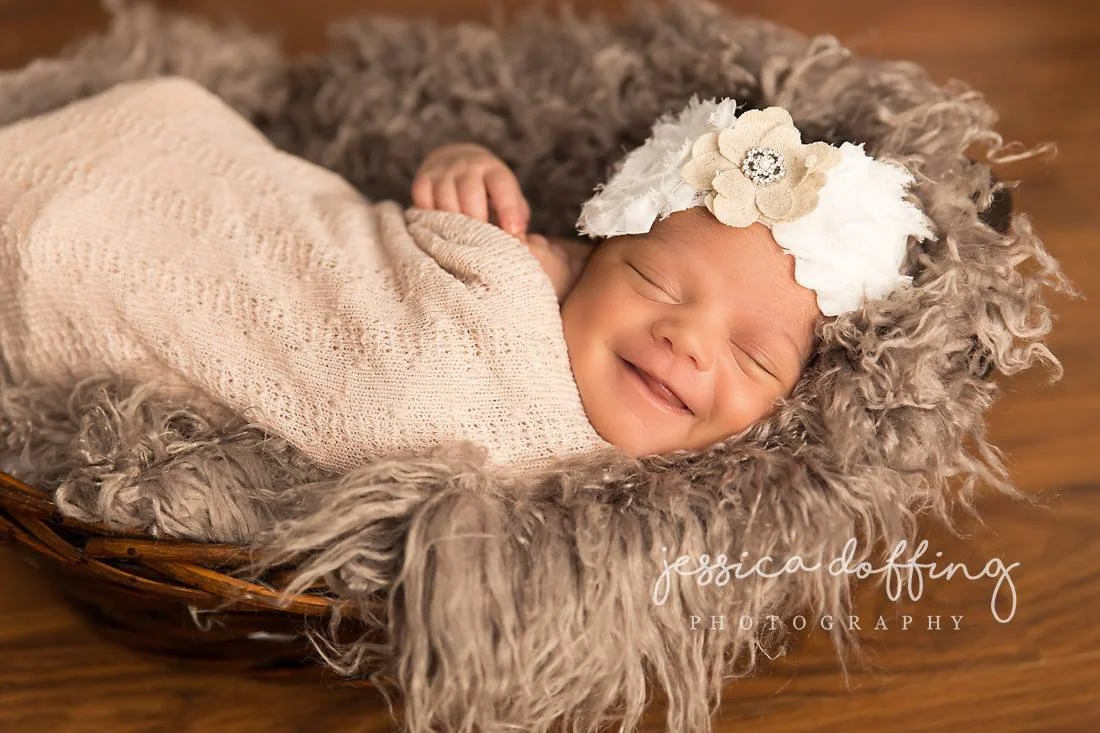
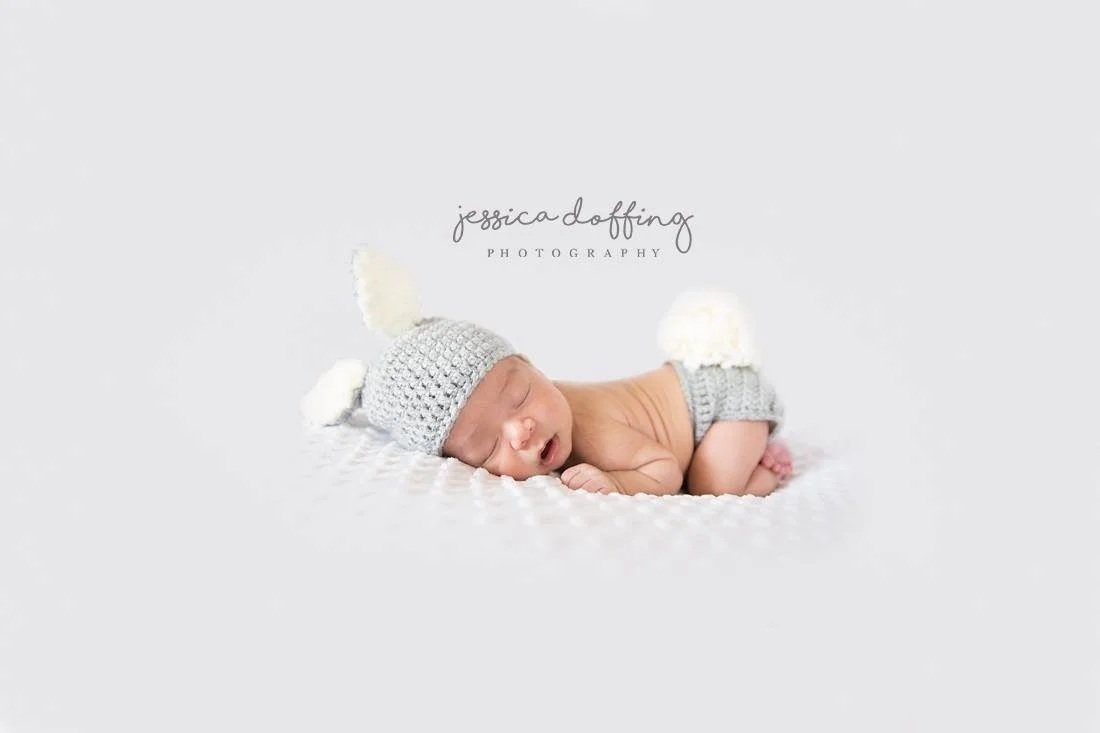

We all have to start somewhere! 🫣😂
If you've made it this far, chances are you're serious about turning your love of newborn photography into something bigger. And I want you to know that it's absolutely possible. Every established photographer you admire started exactly where you are now - learning as they went, making mistakes, asking questions, and figuring out how to wear all of those hats. Give yourself permission to grow into this. Build your business intentionally, prioritize safety, and remember that progress is far more important than perfection.
Take a deep breath, grab the checklist, and tackle one thing at a time. You've got this.
Download the free Newborn Photography Business Startup Checklist below to help guide you through the process.
Need a little extra support? I offer both in-person and virtual newborn photography mentoring where we can work through everything from safety and posing to pricing, workflows, and building a business that fits your goals. Sometimes it helps to have someone who's worn all of the hats before walk alongside you as you figure out which ones fit best. You can see all of my mentoring options on my Mentoring & Workshops page. Start with a one hour virtual (Zoom) mentoring session to get started and I can help you take that first big step to getting your Newborn Photographer hat! 🥳